
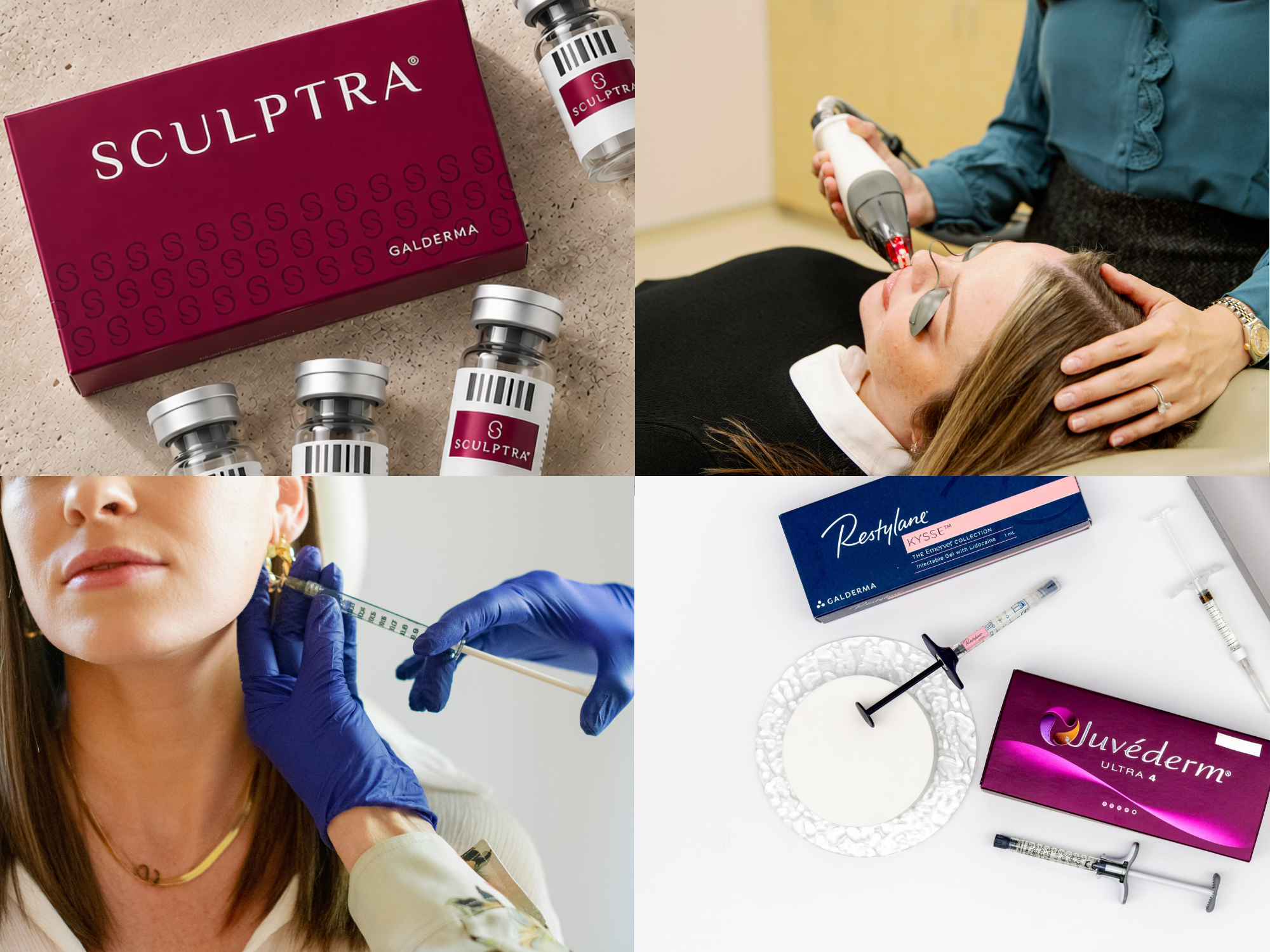
Aging is a multifaceted process. Changes in collagen, skin texture, pigmentation, muscle movement, volume and skin laxity can occur at the same time, yet each is best addressed with a different approach. As aesthetic medicine continues to evolve, we are increasingly moving away from the idea that a single treatment can address every aspect of aging.
In this blog, board certified dermatologist Dr. Payvand Kamrani covers why combination treatment yields the best aesthetic outcomes.
Why is combination treatment a focus?
The simplest answer is that facial aging is multidimensional.
A neuromodulator such as Botox can soften wrinkles caused by muscle movement, but it will not improve brown spots or replace lost volume. A laser can improve sun damage and texture, but it will not necessarily address facial movement or deeper structural changes. Filler can restore support in the right patient, but it does not replace the benefits of resurfacing the skin.
Combination treatment allows us to address these different layers individually rather than asking one procedure to accomplish something it was not designed to do.
There is also evidence that patients can get better results when appropriate treatments are combined. In one study evaluating full-face treatment with a neuromodulator and hyaluronic acid fillers, approximately 96.5% of patients reported being satisfied at three weeks, and 92.9% remained satisfied at six months. More than 94% said they would recommend the treatment.
For me, though, combination treatment is not about doing more. It is about identifying exactly what is contributing to a patient’s concerns and choosing the best treatment for each one.
What Exactly Are “Stackables”?
“Stackables” simply means intentionally combining two or more aesthetic treatments as part of one coordinated plan.
That does not necessarily mean doing several procedures on the same day. There are really three ways I think about combination treatment:
- Same-day treatments: Certain treatments can safely and effectively be performed during the same appointment. For example, a patient may have a neuromodulator and filler together, or we may pair compatible laser treatments to address different concerns during one visit.
- Sequential treatments: Sometimes the better approach is to perform one treatment, allow the skin to recover, evaluate the result, and then add the next treatment. Depending on the procedures, expert guidance often recommends spacing treatments by approximately one to two weeks so that swelling, redness, or bruising can resolve before the next step.
- Long-term treatment plans: My favorite way to think about stacking is often over the course of an entire year. Different treatments work on different timelines. Neuromodulators may last around three to four months, while fillers can last much longer and collagen-stimulating or laser treatments continue producing changes gradually over time.
A good aesthetic plan does not need to happen in one appointment. Sometimes the most natural result comes from strategically layering treatments over several months.
Our Favorite Treatment Combinations
There are many combinations we can use, and the right one depends entirely on what we are trying to improve. I do not have one “stack” that I use for everyone. The following are just a few favorites that have yielded beautiful results.
1. Alexandrite Laser + Fraxel
This is a combination I like when a patient has both pigmentation and changes in overall skin quality.
An Alexandrite laser can be used to target specific brown spots or excess pigment, while Fraxel can address broader concerns such as texture, fine lines, pores, and sun damage while also stimulating collagen.
Rather than turning the settings up on one device and hoping it addresses everything, we can use each laser for what it does best. This is one of the concepts behind combination treatment: different modalities target different components of aging, including pigmentation, texture, collagen loss, volume, and movement.
2. V-Beam + Alexandrite Laser
This is another combination I use frequently for patients who have both red and brown discoloration.
V-Beam is a vascular laser, so we can use it to address redness and visible blood vessels. An Alexandrite laser targets pigment, making it useful for certain brown spots and sun damage.
Many patients do not have just “redness” or just “brown spots.” They have both. Using two different wavelengths allows us to treat each target more specifically rather than trying to make one laser do two completely different jobs.
3. Neuromodulators + Hyaluronic Acid Filler
Neuromodulators and filler complement each other because they treat two different causes of facial aging.
Neuromodulators soften lines related to muscle movement, while filler can restore support or volume where it has actually been lost. When used thoughtfully, addressing both movement and structure can often create a more balanced result than concentrating heavily on one area.
In the a recent filler study evaluating a multimodal approach, patients reported significant improvements in psychological well-being and social confidence and rated themselves as looking an average of 4.5 years younger four months after treatment.
That does not mean the goal should be to look a specific number of years younger. I actually think the better goal is to look rested, balanced, and like yourself.
4. Hyaluronic Acid + Collagen Biostimulators
I also like combining treatments that provide structural support with treatments that stimulate the patient’s own collagen.
Hyaluronic acid filler can provide more immediate support where it is needed, while biostimulatory treatments work gradually to improve collagen and skin quality over time. These treatments can be used together, or strategically spaced throughout the year.
This is especially helpful when we want to avoid relying on increasingly large amounts of filler to accomplish everything. Instead, we can use different treatments for different jobs.
More Isn’t Always Better
Definitely not!
The rise of combination treatments does not mean every patient should leave the office with a long list of procedures. The most important part of aesthetic treatment is still the consultation.
Before recommending anything, I look at facial anatomy, skin quality, pigmentation, volume, movement, skin type, goals, and how much downtime a patient is comfortable with. Sometimes that assessment leads to several treatments. Sometimes it leads to one. Sometimes my recommendation is to wait.
The medical literature on combination treatment emphasizes this same idea: treatment should begin with a thorough assessment and an individualized plan, rather than a predetermined menu of procedures.
Safety is also part of knowing when not to combine treatments. Some procedures can be done together, while others are better separated. For certain combinations, consensus recommendations suggest waiting one to two weeks between procedures so the skin can heal and we can evaluate the first result before adding another treatment.
One of the advantages of a global treatment plan is that it may actually allow us to use less treatment in any single area. A recent filler study noted that approaching the face as a whole allowed lower amounts of filler to be distributed across different areas rather than overcorrecting one location.
That is an important part of my treatment philosophy. The goal is harmony across the face, not maximum correction of every individual feature.
The Bottom Line
Aesthetics is highly personalized. Stackables allow us to strategically combine treatments to address your individual concerns and create natural, comprehensive results.
For expert advice on the treatment combination best suited for you in the Raleigh, Durham, Chapel Hill area, contact our office to schedule a consultation.
